
Zeroed In: In celebration of Earth Day, ZHomes approaches one-year anniversary.
Published 2:58 pm Thursday, April 18, 2013
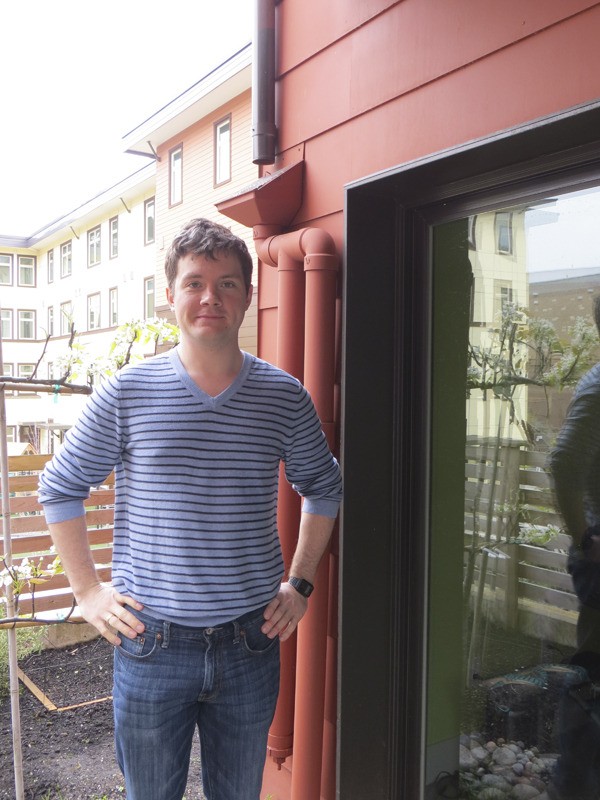
Buying a ZHome was a lifestyle choice for both Eugene Shamshurin and Gordon Frances. Each purchased a home in the award-winning Issaquah Highlands development last year.
Now approaching the one-year mark, both seem very pleased with their investment.
Built by Ichijo USA, which has new projects in the works in Issaquah, the homes were built to be zero-energy homes. When it’s sunny outside, solar panels on the roofs produce more electricity than the homes need and the extra is sent to the regional power grid. When it’s cloudy, homes reclaim that energy.
Shamshurin moved to Issaquah from New Hampshire, but he is originally from the Ukraine. He said he and his wife, Tatyana, and their 4-month-old son, Daniel, decided on the home because it had everything that was on his list.
“They put a lot of thought into designing the place,” Shamshurin said. “In the Ukraine, you don’t depend on anything. You had to depend on yourself.”
With his ZHome, he doesn’t have to worry about power outages or running out of water. And he liked the fact that the builder used materials all sourced within 100 miles.
Even the concrete floor at ground level is warm because it is insulated with a special styrofoam. Also, there is zero noise coming from the heating unit, which is in the garage, especially thoughtful since they have a baby.
For heat, the units use geothermal exchange from fifteen 220-foot-deep wells. The earth maintains a constant temperature of 50 degrees, so the system exchanges heat with the earth through a ground heat exchanger.
Frances said his interest in alternative energy started before he was a teenager.
“One of my neighbors had the first solar powered home in Surrey, Canada,” he said. “He built the house around an old steam boiler from a ship.”
Francis said he put solar panels on his dad’s sailboat when he was just a youngster.
Like Shamshurin’s unit, Frances has all wood floors. Both have two-bedrooms, and a loft in addition to the office on the ground floor. Frances said they glassed-in their loft area for quiet.
The units use city water for drinking, but rainwater collected from the roof goes into an 1,800 gallon reservoir for use in the toilets, washing clothes and watering the lawn or garden. Shamshurin said the reservoir doesn’t need to be topped off until August.
The kitchen countertops, which look like they might be granite, are actually made from recycled glass. The doors are all made from 88 percent recycled medium-density fibreboard.
“All the appliances came with the house, including an inductive stove,” Shamshurin said. An 120-gallon hot water heater is heated by the heat pump, which is fueled by the geothermal system.
Shamshurin said his unit produced a record 45 kilowatts hours of power on one of the beautiful sunny days on Easter weekend. The gloomiest day produced 2.4 kilowatt hours. In February, Shamshurin said they consumed, on average, six kilowatt hours a day.
The average house in Issaquah consumes 21,000 kilowatt hours a year said Brad Liljequist, project manager with the city, so six kilowatts multiplied by 365 days is 2,190, almost one-tenth of what a “normal” home consumes.
As for the bottom line, Shamshurin said they only paid $8 per month to PSE until January this year, when the bill was $59. In March, the family paid $25.
“It’s a great first version of a product,” Shamshurin said. “It has its quirks, but we’re on our way to being zero net energy for the year. We’ll know in June or July.”

The reservoir (round grey disk) is used to collect rainwater for toilets, washing machines, and outside watering.

Solar panels can be seen on the roof tops of the ZHomes.