Why kids struggle with writing: Literacy advocate Penny Kittle to speak at Pacific Cascade Middle School Jan. 21
Published 12:24 pm Friday, January 16, 2015
Are you the parent of a student in the third through eighth grade who struggles with writing?
Rest assured, your child isn’t the only one. Results from the 2011 National Assessment of Education Progress — the most recently published writing results from “The Nation’s Report Card” — showed that one-fifth of eighth- and twelfth-graders evaluated performed below federally recognized basic writing standards. Only one in four students in each group performed above a standard deemed “proficient.”
Poor writing ability doesn’t just affect performance in English class, or in the essay-heavy curricula of history and civics classrooms. The physical and natural sciences require deft communication skills to communicate experiments and record results. Nor are mathematics exempt: math teachers have long asked students to explain their work and many Common Core exercises require written explanations of a student’s work.
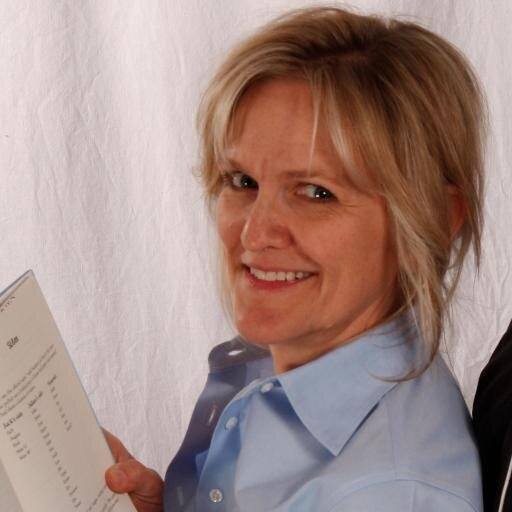
On Wednesday, Jan. 21, New Hampshire educator, author and literacy advocate Penny Kittle will give a presentation on supporting students with writing at home. The presentation, sponsored by the Issaquah Schools Foundation, will take place from 6 p.m. to 7:30 p.m. in the Pacific Cascade Middle School Commons.
Kittle is the author of multiple books on the subject of teaching reading and writing, including the 2005 textbook “Inside Writing: How to Teach the Details of the Craft,” co-authored with late mentor and fellow writing advocate Donald Graves.
“Inside Writing” advocated what Kittle and Graves referred to as an “apprenticeship” approach to writing instruction, in which teachers use their own writing to mentor students. The text also broke down the writing process into several key steps, including rereading of one’s own work, use of detail and playing with point-of-view.
In a March 2014 essay for the Adolescent Literacy In Perspective newsletter, titled “What We Learn When We Free Writers,” Kittle wrote that she personally subscribes to the motto nulla dies sine linea — “Never a day without a line.” She said that the late Pulitzer prize-winning journalist Donald Murray, a friend of hers, constantly expounded the value of writing every day. The advice inspired she and her colleagues at Conway Elementary School to challenge their sixth-graders to write in notebooks — ungraded and without pressure — every night.
“Murray believed that a constant state of composition was essential for writers,” Kittle wrote. “He said, ‘I try to write every day,’ but more importantly, Murray described what happens when we don’t, when we’re out of practice. ‘And when I miss a day or two, or a week, it becomes harder and harder to write. I want to write for all the days I haven’t written; I want to write more than I can write, and better than I can write. And therefore I cannot write at all.’
She continued at the close of the article: “…Let us reach to empower all our students. Let us find words to name what is vivid and crucial to us, so we are ready to pass on the energy of creation. In sixth grade, we asked students to live like writers, and we joined them. They left us in June as confident, fluent, independent writers, notebooks in hand.”
Kittle’s presentation is free to all interested parents. No registration is required. Pacific Cascade Middle School is located at 24635 S.E. Issaquah Fall City Rd.