Progress continues on East Lake Sammamish Trail
Published 11:37 am Tuesday, November 25, 2014
During a ribbon cutting for the interim gravel trail along East Lake Sammamish in 2006, King County Commissioner Ron Sims told the Seattle Times that the trail is “a treasure … Years from now, no one will remember the fight.”
Eight years down the road, Sims’ words are still ringing hollow.
An ongoing issue for over a decade, construction continues on planned paving and upgrade plans for the East Lake Sammamish Trail as lakeside homeowners continue to protest the trail’s widening and alteration of the landscape.
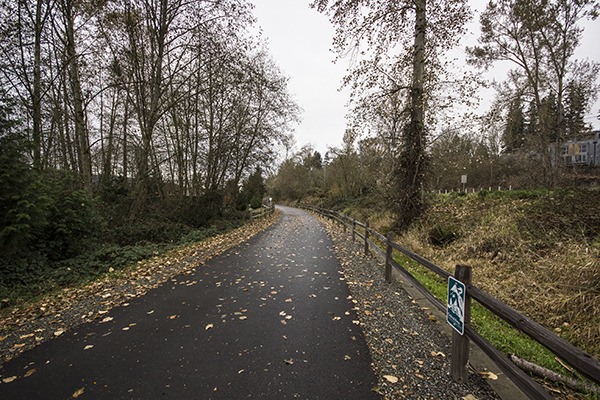
As of Nov. 24, crews were installing chain link fencing throughout the norther segment of the trail, north of Inglewood Hill Road, completing work on walls and applying anti-graffiti coating before they start excavating driveways and intersections next week, according to information provided by the King County Office of Parks and Recreation.
Opened in 2006 as an interim gravel trail, the trail’s master plan always called for the trail to be paved and widened to 12 feet. The trail follows a former Burlington Northern rail line. The right of way for the railroad was sold to the Cascade Land Conservancy, then to King County.
The right of way issue is one of many points of contention between homeowners and King County. Lakeside land owners also protest the county’s removal of trees, particularly on the northern segment under construction, and restriction of access to homes for both residents and emergency crews.
 “On that first segment the county, despite all of their promises to save trees and to not cut down significant trees, cut every tree down in the construction, clearing and grading areas,” Sammamish city councilman Ramiro Valderrama said. “That includes all 160 state-defined significant trees.”
According to Tom Hornish with the Sammamish Homeowner’s Organization, many residents on the north segment now have difficulty getting in and out of their garages, a concern the organization has with the southern and central segments now in planning and design.
“The people I’ve talked with, everybody is a very strong proponent of the trail and they use the trail,” Hornish said. “I think the concerns that everybody has is what, if any, impact the buildout has on private homeowners along the trail. It becomes onerous so that the balance gets out of whack, balancing the public interest and the private interest.”
As the county begins to wrap up work on the northern segment, design continues on the southern segment between Southeast 33rd Street and Southeast 43rd Way. On Oct. 22, King County published its tree retention plan for the 1.2 mile stretch, pledging to retain 124 of 194 aborist-designated significant trees. Of the 70 to be removed, 57 lie within the clearing and grubbing limits for trail construction, including one defined as a heritage tree by Sammamish municipal code. The remaining 13 were designated by King County’s arborist as being too hazardous to leave in place during construction or afterwards, due to their condition or defects, including six heritage trees.
Another 51 trees along the route have been marked to be monitored during construction. As their condition and location does not warrant outright removal, they are still at risk to be affected by construction efforts.
One positive development for homeowners has been an increased response and advocacy from Sammamish city officials, according to Hornish, a sentiment shared by Valderrama.
“I do see the city submit its comments,” Valderrama said. “While they can’t make [the county] move in one direction or the other, the city is now asking them for changes on alignment and to save trees.”
When asked for comment, Sammamish Communications Manager Tim Larson said that the city does what it can.
“The city has been pro-active in its efforts to improve communication between King County and local residents,” Larson said. “There are limits to what we can do, but when we see an opportunity to ease tensions or find a solution, we try to help.”
Despite years of lawsuits and bickering between both sides, Hornish said that many residents do want to see a trail.
“Many of us who live along the lake, we all want the trail,” Hornish said. “We just want it done responsibly, respectfully, and quickly.”
King County officials publish weekly updates to construction and planning progress on all three sections of the trail. For more information, click here.