Back on the Plateau
Published 5:05 pm Wednesday, September 9, 2015
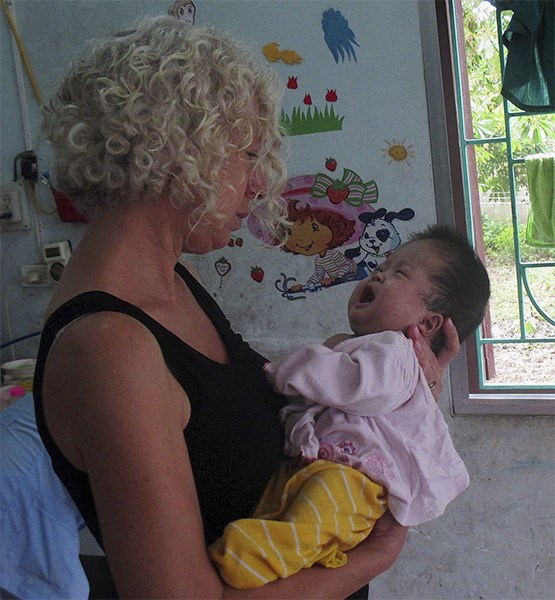
Sammamish resident Dawn Sanders did eventually find a way to spend her time in Vietnam while her husband worked on a Peace Winds America initiative there.
She volunteered at a local orphanage, traded English lessons to Vietnamese students for their help bargaining in the local markets and became accustomed to a simpler lifestyle more than 8,000 miles away from the states.
After spending a year and a half in the country, former city volunteer coordinator and “champion of nonprofits and charities,” as Sammamish Chamber of Commerce Executive Director Deb Sogge calls her, is back in town for a visit.
Her first full day back and she was at Sammamish Nights Aug. 22, which she helped create over a kitchen table many years ago with Sogge.
That Sunday, Aug. 30, she went to Costco and just stood there, marveling at all the stuff.
Over the next month or so she’ll see her children and grandchildren, squeezing coffee visits in with old friends.
She’ll return to Vietnam in October, probably.
But her vacation to the Plateau is about more than socializing with old friends and family members. Sanders is also rallying financial support to aid her and her husband’s efforts in the port city of Haiphong, located in northern Vietnam, where they have been living since late spring 2014.
While she had visited the country before, living and working there was a different matter.
“Everyone tells us when working in a developing country, you have to have a lot of patience,” Sanders said.
This proved true, as Sanders was initially overcome by the sudden change.
“The days are very long,” she said. “It was really overwhelming at the beginning.”
Living as an expat
When Sanders worked with expatriates, primarily women from India and Russia, during her time with Leadership Eastside, she gleaned from their experiences in the United States something of what her time might be like in Vietnam.
“Most of these women had their master’s, their doctorate’s, and they have to sit,” she said. “So I was kind of prepared.”
She didn’t have a work visa; for a while, she did just sit — in her house, watching TV.
She and her husband tried to adapt to the Vietnamese lifestyle.
They quickly abandoned the dishwasher, an uncommon amenity in Vietnam; they couldn’t even find a store that sold dishwashing detergent.
They didn’t really need it anyway, she said. After all, they only had four plates, with a similar amount of utensils.
Traditionally, Vietnamese women go shopping twice a day. This was when Sanders met with one of her first struggles: shopping.
In Vietnam, you bargain for everything. (Seriously, there wasn’t even a standard price for her plane ticket home.)
She couldn’t communicate, though. Without knowing the language buying lunch supplies was a task.
It wasn’t until a month and a half in when Sanders found a small group of women, part of the International Woman’s Group of Hai Phong, that she started making progress.
“That really saved my life,” she said.
They’d practice conversational English over lunch. Sanders was the only American in a mix of Japanese, Korean, Taiwanese, Romanian, Swedish and Belgian women, but English was their common language.
Sanders also began volunteering with the Vietnamese Chamber of Commerce and their Effortless English Class, where she made a deal with some of the Vietnamese students.
She helps them with their English, and “they take me shopping,” she said. They’d also help her with other chores where it helps to speak Vietnamese.
Like most people, Sanders’ bike was her primary mode of transportation.
Though, as an American floating a billow of white-blonde hair, it was common for people to stop her for a picture, she said. Some would even invite her and her husband to dinner.
“They really love Americans over there,” she said. “Because of that, we feel a real responsibility to portray America in the best light possible. … We try not to go out in a bad mood.”
Vietnam is a relatively young country. The median age of citizens is about 30 years old, according to 2014 data from the Central Intelligence Agency.
Sanders said most people don’t really remember what the Vietnam War — or, as it’s called there, the American War — was like.
“A lot of it they’ve just forgotten,” she said. “They’re so friendly.”
Although, the lasting effects of the toxic herbicides America dropped across crops and villages during the ‘60s are seen in the population today.
The orphanage
Sanders involvement in the community grew when she met a Vietnamese man named Tung Nguyen.

Nguyen runs the English classes at the Hoa Phuong Orphanage in Hai Phong, as well as the center for developmentally disabled children called Thiện Giao based in Do Son.
Thiện Giao relies on a farm that produces mushrooms it can sell. Staff also use methane collected from cow feces to cook their food.
Some of the disabilities are due to the lack of prenatal care, which is common among the poorer areas of Vietnam, Sanders said. The others are the result of Agent Orange.
From 1961-1971, America sprayed millions of gallons of toxic herbicides to kill trees and plants that blocked visibility from the air; it covered much of South Vietnam, exposing millions to the chemical that can cause cancer and birth defects.
It takes a long time for the chemical to disperse in the human body and it can affect children born of those who came in contract with it.
The chemical can also be found in the soil.
More than 1 million Vietnamese children (under age 18) have disabilities, according to Agent Orange Record, a not-for-profit organization that works to address the long-term health, environmental and socio-economic impacts of war.
Homeward bound
Their work is not over.
She and her husband, John, plan to be in the country for another year and a half, while John finishes his work leading a Peace Winds America initiative based out of Hai Phong.
Working with the private and public sector, along with the local government, he teaches disaster preparedness, response and recovery planning and training, with an emphasis on business resilience.
He is scheduled to come back to the states for a visit in October. Getting back to the U.S. had proved difficult for Dawn Sanders.
“I had let my visa expire,” she said.
It took three weeks, an unusually long period of time, to renew it — the Vietnamese government wouldn’t let her leave the country until she did.
And paying for it was even stranger. People really do bargain for everything, Sanders said, even a government-issued visa.
She was told the price would be 5 million dong (roughly $250), plus a little extra (about $40) for the official’s time. Apparently, “he was going to have to work really hard” to get this renewed.
At that point, Sanders didn’t care. She just wanted to get on the plane.
“You know, it’s so different,” she said, reflecting on how the Vietnamese government operates. “I don’t think I’ll never take for granted the freedoms we have here.”
Sanders plans to set up a funding campaign through the Kids Without Borders’ Facebook page to help with her efforts in Vietnam. Watch for it at www.facebook.com/pages/KIDS-WITHOUT-BORDERS/272855577559?fref=ts.