Issaquah reconsiders contract with county animal control after off-leash dog attacks
Published 10:38 am Thursday, March 24, 2011
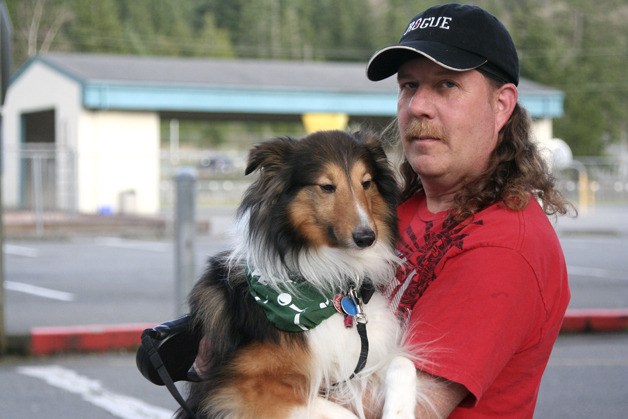
Mike Waine was out with his sheltie for an evening walk down Evans Lane, when a 100-pound hunting dog flew around the corner with a vicious bark.
Waine scooped up his dog, Sammy, and headed in a different direction, but he didn’t get far.
The dog circled and pounced.
Biting deep into Sammy’s leg, it ripped the pooch from Waine’s arms so violently it tore a piece of his jacket sleeve.
With Sammy firm in its teeth, the dog pulled him down the street until the leash ran out of slack.
Sammy snapped out of his attacker’s mouth.
“He was going to kill our dog,” Waine said. “The scariest thing was the dog didn’t care that I was there.”
Just in time, the owner turned the corner and called the unleashed dog back. He left without a word.
Waine didn’t bother calling King County Animal Control, which would have taken days to resolve the issue, he said.
He knew where the man lived, and sent Issaquah police to resolve the issue. They settled informally with $400 for the veterinarian bill.
Problems with off-leashed dogs, including attacks, are a recurring issue in the Evans Lane neighborhood, a scary thought given the number of young children in the area, Waine said.
He’s among a few of the neighbors that now walk with sticks or heavy flashlights for protection.
“You shouldn’t have that in the back parts of your mind when you’re out walking,” said wife, Patty Waine.
Several of his neighbors joined Mike in support at a City Council meeting earlier this month, where he asked for signage stating leash laws and a more responsive animal control.
Mayor Ava Frisinger was moved enough to respond with a short letter, assuring the Evans Lane neighborhood that the city is reevaluating the contract with King County Animal Control for the “safety of our residents.”
“Clearly,” she wrote, “a three-day response is not the service level the city would expect.”
‘Improved’ service
Off-leash problems started in the Evans neighborhood shortly after Timberlake Park banned the pooches over a year ago.
A few unruly dogs were stealing picnic food and jumping up on strangers, and animal control wasn’t responding in enough time to contact the pet owners.
“Off leash situations are not a high priority,” said Ken Nakatsu, manager of King County Regional Animal Services.
Pet owners instead began using the trail behind Issaquah High School near Evans to walk their dogs, Waine said.
To make problem worse, King County slashed its animal control budget.
Officers used to be available 70 hours a week. Now it’s 40 hours and doesn’t include weekends, Nakatsu said.
The drop in service was included in a two-year contract Issaquah signed summer 2010, and so was a 50 percent rate hike.
The county decided it was no longer willing to subsidize the cost of animal control in cities like Issaquah and Bellevue, Nakatsu said.
What the new contract did offer was “better communication in expressing concerns,” said Issaquah spokesperson Autumn Monahan.
King County did this by creating four districts and assigning an officer to each district, instead of having officers serve throughout the county.
The city was convinced enough by the new contract to allow dogs back at Timberlake Park in December 2010
The districts mean cities can more easily go to someone with specific problems, Monahan said.
It also means there is only one officer for the district that includes Bellevue, Issaquah, Snoqualmie, Newcastle, Mercer Island and Maple Valley.
Animal control’s focus is safety, Nakatsu said.
If there is a bite in progress or an animal cruelty case, where people and pets are in danger, animal control officers hope to respond in 1-2 hours, he said. “If it was a vicious dog, it would be a high priority for us to respond.”
Officers are on call through the weekend to respond to these types of cases.
If someone is bitten and calls after the fact, such as with Waine, the goal is to have an officer there in 4-24 hours, excluding weekends.
The delay makes it hard for officers to do much, and they often are left leaving notes on doors, he said.
Some cities pay King County extra to extend service over the weekend. Three cities in the north pooled their resources this year. They’re paying a total of $75,000 for a part-time officer.
Issaquah is considering this as an option, Monahan said.
It could also partner with neighboring cities to offer its own animal control service. Right now the city only pays King County $60,000 a year.